Lochwinnoch
The purpose of the site is to help those new to the village to connect with its past and for those who have left for pastures new to remember what was left behind
The Hepburn Patent
&
The Move to Canada
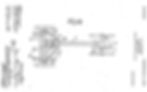
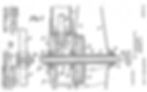
I come now to the year 1906. My head was full of the ideas that could be worked into the building of motor cars. I was getting along well in the Arrol-Johnstone office with a new car design they were busy with. We were doing away with the old idea of a car with an engine under the seat and the new type of car had to follow the plans adopted in the Arrol-Johnstone racing car. This was the car that had won renown in the Isle of Man races which I had helped to design. The idea struck me that the flexible shaft connecting the gear box with the back axle could be eliminated if the engine and gear box was all in one piece with a tube to the back axle carrying the drive shaft. Also, a hinge to connect the engine to the car frame with two bearings. I worked out the design at home in the evenings and weekends. I made working drawings and the idea seemed feasible. So, I applied for a patent through a patent agent and eventually they were granted by the patent office in London. The new idea was that the engine and mechanism of the car were in one piece from the engine to the back axle. It could be applied to a three or a four-wheeled car. It was especially simple for a three-wheeler with one driving wheel at the back and two in front. The patents were known as Hepburn’s Patent. It can be viewed at the end of this document.
The best way to get my patents proven was to get a car built. So, I sent plans to different firms for prices to build one. I bought a French Aster engine with a single cylinder producing five horsepower that was being made for heavy motorcycles. I borrowed four hundred pounds from my mother to get the gearing and other parts made in Sheffield. John Sloan got interested when I told him about it. He gave me some good advice about renting a small workshop near his house in Crosshill where I could get the car built. I found I had to give up my good job at Paisley to get time to build the new car. John Sloan offered me lodgings with the aunt he lived with and I got an old friend Frank McKnight to work for me. He was out of a job at the time.
Old Cameron was very loath to let me go when I gave my notice at the Arrol-Johnstone office. He told me I would never make a success of it when I told him what I was planning. I often wished I had taken his advice. After months of hard work and long waits for delivery of the material, Frank and I had the car built at last. John Sloan and I took it out for the first run to the south of Glasgow. It ran nicely but in going down a steep hill near Cambuslang the wire actuating the brakes broke away from the pedal and we rushed down that hill with nothing to stop us. A cart was turning at the foot of the hill from a side road but the carter saw us coming. Seeing that something was wrong he pulled to the side. We were very fortunate and only grazed the tail end of the cart by a few inches. When we were clear I looked at John and his face was as white as a sheet. “I want out!” he cried. “Tut, tut. That’s nothing,” I said, “We’ll get back all right if we take it easy and avoid the hills.” “But we’ve got no brakes,” he said. “Well the road is pretty level now.” We got home without any more trouble and Frank got the brake wire fixed next day but John Sloan never took another ride. Frank and I had to do the rest ourselves.
There was a laundry at the mouth of the lane we had our workshop in and the laundry girls were very interested. Every time they heard the puff-puff of our engine they ran to their door to see the thing pass. I forgot to say that the body of the three-wheeled car had been built by Wm. Holmes of Irvine, a cousin of my mother who had a carriage building business at Irvine. He built it for me at cost price and the leather upholstered seat could hold two people easily. As Frank and I passed the laundry we would hear shouts of “Give us a ride.” “No room.” Frank would shout but one lassie jumped on the back once and we had to stop to dislodge her.
My next run was out to Lochwinnoch to let my mother see the car and it caused great interest in the village. My mother told me not to bring it back again as she didn’t like crowds on her doorstep. I got Bruce Dickie and Willie Orr interested in the car. Willie was home from Burma about then. He arranged a meeting of Bruce Dickie, John Sloan and Dan Wright at my mother’s house one weekend to talk over the matter of forming a company to start building and marketing the car. Bruce had the money. Sloan and I had the experience and Dan was our lawyer. Bruce was quite keen on getting into the car business. He had just finished college and was at a loose end. After talking over all the aspects of the proposal Bruce was nearly convinced that something could be done. John Sloan then took it upon himself to propose another idea that he had in mind for a while. He advocated the starting of an engineering shop to specialise in the cutting of gears of all kinds. He said there was a good future for a business of that kind and would take less capital than building cars. He made a good talk on this and seemed to convince Bruce that it could be carried out nicely. I saw that I had lost my chance to form a car building business. Sloan had taken the feet from under me so I agreed to go in with he and Bruce in their gear cutting if they would consider it a start in car building. The plan was that they would consider taking up my patents once the gear cutting business was fully established. That was agreed to and my car was put aside in the meantime.
Dan Wright and I had a talk afterwards. Dan was ill-pleased at Sloan for bringing in his proposal just when we had met to discuss my car patents. Sloan seemed to have no interest in my car question and that fact caused a lot of friction between us. We formed the Abbot Engineering Co. Ltd. We rented a workshop and office at 12 Smith Hills, Paisley that Dan Wright told us about. It was an old foundry but the owner of the building put down a concrete floor for us and built a two-story office building on the street. We installed a 200 hundred horsepower gas engine to drive the shafting we created on the beams above. We bought ten different gear cutting machines, most of them American. In all Bruce spent about £35,000 on machinery alone. We had a large bevel wheel cutting machine, several spur gear cutters and a worm gear cutter. There were also milling machines and several lathes. Also, a gas furnace for annealing and other things necessary in an engineering shop. The name Abbot was taken from the names of the five directors of the company. There was John A. Sloan, R.B.Dickie, J.B.Dickie, Wm. O. Orr and James T. Hepburn. You will notice that the five middle initials spell out Abbot. It was my sister, Addie, who discovered that when we were trying to think of a name for the new company. The nearness of the old Paisley abbey in the same street made the name appropriate.
I made the plans for the shop arrangement and then got busy on a catalogue and price list for sending around to prospective customers and got it printed in Glasgow. Sloan was in charge of the shop and had an office of his own there. I did a lot of travelling about to introduce the company to the manufacturers who needed gear wheels or gear wheel teeth cut in their own blanks. We got work right away but found we had a keen competitor at Linwood near Paisley who had started a few years before us. He was a thorn in our side for a long time because his prices were cut to the bone and he knew his work. Our work increased after the first six months and we had to put on a night shift. I was in charge of the night shift and boarded at Miss Wright’s sharing a room with Dan Wright. He slept in the bed in the night and I used it in the daytime. We employed about twelve mechanics to operate the machines and had a good man as a turner. Frank McKnight was our fitter and worked at a bench. His work was principally with fibre gears which had to be built up with metal frames. We also got some work to do for Coat’s Thread Mills assembling parts for their plant machinery.
The night work began to become too much for me after about six months of it. So, I got Sloan to take a turn at it and I took the dayshift. Bruce and I got on pretty well but I found John Sloan a difficult person to work with. We had worked well together when we were draughtsmen. He developed a jealous nature which I had not seen before. He made the most of any little mistake that he saw me making reporting these to Bruce at the first opportunity. It was a real struggle to make this new business pay contrary to his earlier claims when we had started the business. We were working hard, spending long hours in the shop, travelling about and drawing very little salary – practically only our expenses.
At the end of 1907 we found we had made a good start, developed a good business and decided if we kept going, we would be able to cut expenses still further. We had no borrowed money and still had a few pounds in our bank account. However, at the end of 1908 things were not going very smoothly between Sloan and I. I was finding out that it had been a mistake getting him into the company. Now that the gear cutting business was operating successfully, I brought up the question of developing the light car business by taking over my patents as had been promised at the formation of the company. Sloan and Bruce Dickie came out strongly against it. I pointed out that the profits from gear cutting were not enough to pay us decent salaries but motor car work was growing steadily and there was a huge demand for cheap cars. I may have been too optimistic but I had to do something to improve our financial situation. John Sloan became so vituperative against my proposal that we nearly came to blows. In fact he did lash out against me when I told him once he was not telling the truth. He had denied that there was any promise to take up my patents. Bruce said the trustees of his father’s estate would not advance any more money. I was so disgusted at their lack of foresight that I decided to resign leaving them to carry on the company themselves. Bruce saw I was in earnest and said he would buy back my share in the business. He had lent me a few hundred pounds to take up some stock when we started and he took back the bonds at their face value. This was good of him.
I went home at the end of the year to Lochwinnoch and stayed there. My failure to get along well in the Abbot Engineering Co. and their refusal to stand by their promise to develop my motor car patents so discouraged me that I took a holiday for a month or so doing nothing. I stayed at home trying to make up my mind what to do next. I wrote to several motor car firms in England sending them copies of the plans of my patent for car design without success. Every one of them answered that they were having trouble with a slump in the market for cheap cars. These setbacks and the bad effects of my relationship with Nellie Wright gave me the idea of trying to make a fresh start in Canada.
I had read a lot about the nice climate of Vancouver Island and the coast of British Columbia and I decided to give it a trial. My mother and sister were against the idea. They didn’t want us to be separated. It was a hard struggle to make up my mind and to leave them. I was now thirty-three years old and thought I should strike out for myself. What I should have done was to go out and see the Ford Motor Car Co. at Detroit, take up with Henry Ford my ideas in car design and get into their office as a designer. If I had done that I am sure I would have made good.
I had read a lot about fruit growing in BC and thought if I could not get anything in my own line of work I might take up fruit farming. That idea remained in my head for many years after I arrived in Canada. Perhaps it would have been better to have erased it thoroughly because when I did take it up many years later it did not work out very well.
I happened to mention to Arthur Muirhead of Bridge of Weir Tannery that I was thinking of going to Canada. He at once offered to buy my car from me. It was still in a shed at the Abbot works so I got Frank McKnight to take it out to Bridge of Weir and to run it for Arthur. There was an election coming up so Frank spent a day taking people back and forth to the polling booth. Frank had a little trouble with it as usual and I don’t know how long Arthur kept it. Roland Muirhead gave me letters to an old friend of his at Nanaimo, BC and asked me to look him up if I ever got there.
It was near the end of March, 1909 that I left home and got on board the S.S. Cassandra of the Donaldson Line at one of the Glasgow docks. To save my small amount of cash I had taken a steerage ticket to St. John’s, New Brunswick (the St. Lawrence wasn’t open). I had a train ticket from there to Vancouver, BC. Dan Wright came with me to see me off and we sailed down the Clyde together and he disembarked at Greenock. Dan was a real friend. He has been dead for many years but his memory is as fresh as if we were still together. I often think that I did not show him how much I valued his friendship. I took it more or less for granted but I missed him badly when half a world lay between us. While we sailed down the Clyde Dan pointed out the places at Dumbarton Rock and Greenock where we had cruised in the cutter yacht and had such various experiences. Then later when I was alone and the ship was passing through the Firth of Clyde, I stood on deck and watched all the well-known places where holidays had been spent: the coast of Bute, then the Island of Arran. Whiting Bay where my mother and sister and I had enjoyed many a holiday. Kildonan where Dan and I spent a few weekends. Then, as it grew dark the last of Scotland that I saw was the Mull of Kintyre – that black headland that gives a scowling farewell to the travellers to Canada and the States.
I looked at the rocky point of the Mull as long as it was in sight and when I couldn’t distinguish anything more of Scotland I went below. I seemed to have an intuition that I would never see the old land again for I can remember wiping the tears off my face before I joined the hilarious group of young immigrants in the steerage cabin where I had a bunk.