

Lochwinnoch
The purpose of the site is to help those new to the village to connect with its past and for those who have left for pastures new to remember what was left behind
The (New) Parish Church
(St John's Church of Scotland)
The first minister of the new Parish Church was Mr James Crawford. His opening sermon was from Revelation xxi. 3, ‘And I heard a great voice out of heaven, saying, Behold, the tabernacle of God is with men, and He will dwell with them, and they shall be His people, and God Himself shall be with them, and be their God.’ He only preached thirteen times because in early January 1809 when on his way to visit Mr .John Caldwell, of Lochside, who was on his death-bed, the minister had a paralytic shock between the Loch Bridge and Lochside House. He lived for a further five years but never recovered enough to preach again. He died on 7th May 1814.
From 1809 there was a succession of preachers who were either probationers or assistants with only an occasional ordained minister. After Mr Crawfords death four potential candidates emerged for the position of Parish minister, Rev. Thomas Young, Rev. George Burns, Rev. James Barr and Rev. Robert Smith. By this time the trustees of William McDowall’s estate had sold the patronage for £1550. It was subsequently disposed of among 77 heritors holding between 1 and 5 shares each share costing £10.
Rev. Thomas Young had been an assistant at Lochwinnoch and was well known and liked, similarly Rev. Burns. On the other hand Rev. Smith was a relative unknown but had come highly recommended by the Laird of Craigends where he had been a tutor for many years. Rev. Barr was also a relative unknown. When the time of the election came it was clear Rev. Young would win the day. However, after some discussions and manoeuvring by parties it was found that Rev. Young would still win unless one of the four candidates withdrew. This was done by Rev. Barr with his votes going to Rev. Smith who was duly elected in October 1814.
The tactical voting led to a measure of discontent but in the end Rev. Smith proved to be a very popular minister with a very long ministry of 50 years. His first appearance in the pulpit at Lochwinnoch was on Sabbath 18th December 1814 but his ordination did not happen till Tuesday 2nd March 1815. On that day the cotton factories, bleachfields and weaving shops suspended work and farmers left their fields to attend the public services of the day. Parents took their children to church “to see the minister placed.”
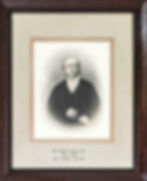
Dr Smith recorded the following resolutions in a journal dated March 31st 1812. I resolve, in the presence of God: First, to be upon my guard against indolence and listlessness. Second, to confine my thoughts to one subject at a time. Third, to consider every night what is to be the employment of the following day. Fourth, to review frequently the manner in which I am doing my duty, endeavour immediately to correct what is wrong, and lift up my heart for divine assistance. Fifth, Resist whatever tends to render me indolent and remiss in the discharge of my duty; observe the strictest temperance. Sixth, this shall be a witness against me before God, if I neglect my duty.
It is safe to say he lived up to these resolutions.
At the time of his ordination the manse was not considered a fitting residence. It was agreed by the heritors that a new one should be built on the same site. Meanwhile Rev. Smith continued to reside at Craigends until somewhere could be found in Lochwinnoch. When accommodation was found he began the process of visiting every family in the Parish which took a year to complete. He counted the population at that time to be 3973 comprising 732 families. In 1695 there had only been 290 families and 1450 individuals and in 1758 there were 1530 individuals, 1791 there were 2613 and in 1801 the first Government census counted 2955, and in 1811 it was 3514. He undertook to repeat his entire Parish visitations every two years.
Rev. Smith divided the Parish into districts and set about visiting each one for the purpose of testing their knowledge of the Bible. The Catechism was basically a book full of questions and answers which were used in Christian education to teach the faith. At the end of each Sabbath he would announce which quarter was next – Glenhead quarter, Garpel quarter etc. the village itself was divided into 12 divisions. Despite the ordeal nature of these events they were always well attended.
Another of Mr. Smith’s early schemes, one which he cultivated with great care and success all through his lengthened ministry was his classes of catechumens, preparing parishioners for their admission as members of the Church, and their right to sealing ordinances. He held two of these classes every year. These classes were, from the very commencement, wonderfully popular among the young adult population, both in the town and parish.
When Rev. Smith was in his sixth year as minister he married Miss Marjory Barr the elder daughter of Captain William Barr of Lochside. They married on Tuesday 28th March 1820.
It should be said that the Parish Church could comfortably accommodate 1100 sitters, but when packed 2-300 more. But, with a village population of 3500 the seats were consequently in high demand and very dear. The allocation of seats was so sensitive that right from the start an argument broke out about the allotment of seats and share of the church yard. This culminated in 1812 with a petition being submitted to the Sheriff Depute of Renfrewshire to sort it out. A copy of the petition is in the Document gallery along with sketches of the church and its layout.
On 17th November 1842 The Convocation took place. A great meeting of ministers assembled at Edinburgh to consider the independence of the Church in all her action in spiritual things in relation to the state. It was concluded that if the last appeal to Government goes against them they should cut ties with the State and leave the Church.
Rev. Smith was one of the Commissioners from the Presbytery of Paisley to the General Assembly which met at Edinburgh on 18th May 1843. Five days later on the 23rd within the Assembly Hall at Cannonmills a formal Act of Separation and Deed of Demission was subscribed in the presence of the whole assembly of ministers renouncing their status, emoluments and privileges as ministers of the Established Church of Scotland. The Disruption was now formally in place.
The Parish Church was legally vacant from when the Rev. Robert Smith appended his name to the ‘‘ Act of Separation and Deed of Demission.”
A considerable proportion of the parishioners of Lochwinnoch did not sympathise with the views of Mr. Smith and the party forming the Free Church. A great majority of the heritors and men of influence in the parish, were actually hostile to the movement. They had done what they could to retain the minister in the charge which he had so long and so successfully filled but in the end recognised they needed to find a new minister.

The Rev. William Graham an ordained minister holding the charge of a Presbyterian congregation at Newcastle-on-Tyne, in Northumberland was identified as a suitable replacement. He was in the tenth year of his ministry. His first charge had been over the Scotch Church in South Shields in the same Presbytery, where he had been ordained in 1833. He was translated to the Caledonian Church in Newcastle, in the year 1838, where he was very popular and successful. Apparently it is recorded that ‘‘after a short interval it was found necessary to build a new and larger church for his rapidly increasing congregation.”
In July 1843 the Rev. William Graham preached in Lochwinnoch as a candidate for the vacant charge. It seems ‘‘He came, saw, and conquered.” The residuary Parish congregation immediately set about calling him to be their minister. In fact it was signed on the spot by 397 parishioners, which was a very large number considering the divided state of the parish at that time. The call was presented and accepted at the first meeting of Presbytery and Mr. Graham was inducted at Lochwinnoch on Thursday 7th of September 1843. On the following Sabbath he was introduced to his flock by the Rev. Dr. Fleming, of Neilston.
The parish was not entirely free from some bitterness by what had taken place regarding the Disruption. But to the credit of the parish and its people the bitterness was not as bad as in many other places.
Mr. Graham’s incumbency at Lochwinnoch extended over a period of more than twenty-nine years, and he has been described as ‘‘a faithful, able, and eloquent preacher;” and it has also been said of him that ‘‘his interest in the parish was not confined to its ecclesiastical matters, but extended also to its civil administration.”
It was during Mr. Graham’s time, and in part his efforts, that the church at Howwood was erected. A site for the church was offered by James Octavious Lee Harvey of Castle Semple. This provided convenient accommodation to those adherents who lived about four miles from the parish church. The Howwood district had for many years been carefully attended to both by Dr. Smith and his assistants when in the Establishment, and also under the Free Church; but Mr. Graham in the late 1850's, began to feel his way towards the building of a church there. It opened its doors in 1859.
At communion in Beith on 3rd November 1872 he felt unwell. Two days later he died suddenly at the manse. His health had been deteriorating for some time. He was 72 and in the fortieth year of his ministry, 5 years at South Shields, 5 years at Newcastle and thirty years at Lochwinnoch.
Mr Graham was the twelfth Presbyterian minister at Lochwinnoch, from the days of Ninian Semple, in 1576, a period of nearly three hundred years. He was buried in the eastern corner of the Auld Kirk Yard of the parish, where a monument has been erected, near to that of the Rev. John Couper, former incumbent of Lochwinnoch. The inscription reads thus:-
“RESURGAM.” 1 THESSALONIANS 4 14. IN LOVING MEMORY OF REV. WILLIAM GRAHAM, MINISTER OF THIS PARISH FOR THIRTY YEARS. BORN AT NEWHOUSE, LESMAHAGOW, 11th MAY, 1801, DIED 5th NOV. 1872. THIS STONE IS ERECTED BY HIS CHILDREN. ALSO OF MARY COXALL THOMSON, WIFE OF THE REV. WILLIAM GRAHAM, BORN 15th JANUARY 1807 DIED 3rd JANUARY, 1875. “AND NOW, LORD, WHAT WAIT I FOR? MY HOPE IS IN THEE.”

The Parish Church remained vacant for nearly eight months, during which time several preachers were heard as candidates. At a meeting of the Presbytery, on Wednesday, 2nd of April 1873, the Rev. Robert Gilfillan of the North Church Paisley, was proposed as the new minister. Dr. Lees of the Abbey Church seconded the motion. The new minister was inducted to the charge and parish of Lochwinnoch on Thursday 26th of June 1873, and introduced to his flock the following Sunday.
In the late 1800’s the village suffered economic hardship due to external factors such as the American civil war. This meant that often there were insufficient funds to meet the liabilities of the heritor’s. Two years into his tenure Rev Gilfillan petitioned the heritor’s to carry out essential repairs to the manse. Although it looked a substantial house it had no running water or gas supply, plaster was falling off the walls, chimneys were blocked and an architect recommended raising the kitchen ceiling by 3ft. Little was done over a period of 5 years. In 1889 Rev. Gilfillan threatened to leave the manse due to the ill health of his children caused by water borne disease. In 1892 a sanitary inspector concluded something had to be done about drainage and also recommended that earth is removed from around the house and under the floors, that the floors are raised and ventilated from below. Rev. Gilfillan requested a 4 month leave of absence in April 1892 due to ill health, he died in December 1892.
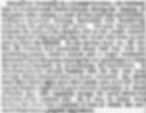
The Church was in no better condition in the 1880’s with its roof, railings, steeple, clock and interior badly in need of repair. Proof of its dilapidated condition is reported in this near fatal accident reported on 23rd Dec 1871.
It took 10 years before this urgent work was completed. Repairs were also required at Auld Simon and the old Kirk graveyard was full requiring a new cemetery to be laid out. In fact a newspaper article in 1894 described the old graveyard in quite horrendous terms (see Documents gallery).

Given the circumstances described above it would be reasonable for you to think the vacancy at Lochwinnoch was unattractive. In fact the position was filled in record time. The Rev. William Sinclair Stevenson was ordained and inducted on the 4th April 1893. No alternate candidates were put forward and this caused some upset among the congregation reflected in the vote, 264 for and 120 against. However he proved to be a man of considerable energy and spent his entire ministry at Lochwinnoch.
The problems with the fabric of the church and manse had not magically gone away. £37 was collected to pay for a thorough clean of the Church which required its closure for 2 weeks in 1895. The heritor’s tried to persuade Mr Stevenson to share the cost of Manse repairs, £68 by the heritors and £52 by the minister, he refused. The heritors agreed to pay the full cost on condition any subsequent costs fell to him. He refused to agree to this arrangement. He knew his rights and did not hesitate to call in the Sanitory Inspector or Church authorites to get essential work done and paid for by the heritors.
The heritors had significant problems in raisings funds in the early 1900’s. Some teinds were frequently in arrears and the principal heritor, the owner of the Castle Semple estate was in financial difficulties and seldom attended meetings. The estate was sold in 1907 to a syndicate who later sold it to the Department of Agriculture. Subsequently many tenant farmers bought their farms. The immediate surrounds of the house were not well maintained, became overgrown and the house burned down in 1924.
It is surprising to find that in the middle of all these issues that emerged during the period 1885 to 1907 a request was made in 1897 to the heritors for a church hall to be built. Fund raising took two years and Mr Macdowall of Garthland offered to add 5% to whatever sum was raised by the congregation. This was a difficult time to raise funds as the Calder Cabinet Works had just been destroyed by fire. The money was raised by 1900 and Mr John McLelland of Kilbirnie appointed as architect. The new hall was opened on 21st October 1901.
The new hall was well equipped which put pressure on the heritors to make improvements to the interior of the church. An architect gave the following advice:-
1 | Wooden flooring should be installed with under floor ventilation. |
2 | The pews and footboards downstairs should be removed and pews installed. |
3 | The gallery pews should remain but three inches added to the seat boards. |
4 | A large boiler should be put in the heating chamber for the hall to provided hot water for radiators in the church. |
5 | Ventilators should be fitted at roof level. |
6 | The gas lighting should be overhauled. |
7 | The interior should be painted and varnished as required. |
The work was completed in 1908. A porch was added in 1912. Various donation were made from time to time such as:
1 | A few members donated the oak communion table and a font made of Caen stone in 1905. |
2 | The Women’s Work Party presented a carpet and new furniture, probably for the Session Room in 1913. |
3 | Margaret and Jane Shedden of Crosslea donated two stain glass windows in memory of their sister Elizabeth. In 1915 the Shedden family bequeathed a sum to the Kirk session for church purposes and to the Sunday School for trips, treats or prizes for the children. |
4 | A “fair linen cloth for the communion table” was donated in 1915. |
5 | Two “handsome brass flower vases for the communion table” were given by Mrs Sinclair Stevenson and Miss Lizzie Crawford of Albert Cottage in 1915. |
6 | A purple pulpit fall was given by Mrs Charles Core of Kilbrene in 1915. |
7 | A piano was given by the Women’s Work Party in 1926. |
8 | The gift of an alms plate from Miss Elizabeth Brown of Auchengrange in memory of her father and mother, Mr & Mrs Peter Stuart Brown in 1928. |

Other notable donations were the Forster & Andrews organ and pulpit by Lady Elizabeth Harvey on the death of her husband Henry Lee Harvey in 1883. A plaque on the pulpit is shown here. Their daughter Alice died aged 9 in 1871 and she is buried between the graves of her parents in the Colligate Church. A stained glass window (see Howwood Parish Church gallery) with plaque (see below) in Howwood Church commemorates her short life.

The stain glass window in the church hall commemorates Robert Barr Smith who died in 1915. He was one of the sons of Rev. Robert Smith and at the time of his death was a prominent business man and philanthropist in Australia. It was originally in the West Church but was relocated on its closure. It was designed by Burne-Jones who was the main designer for Morris & Co which was founded in 1861. The window was made in 1917 and the glazier was a Mr Markham.

The congregation donated two stain glass windows which were placed to the left and the right of the pulpit. These were given in loving memory of Henry Lee Harvey (1823-1883) and Lady Elizabeth Harvey (1831-1888). Henry’s had a figure of The Sower with the Harvey family crest “Omnia Bene Fides Non Timet” (All good faith fears nothing) and the text “He that soweth the good seed is the Son of Man”. Lady Elizabeth’s had a figure of the Reaper with the family crest and the text “The Reapers are the angels”. In the 1960’s it was found the 4 stain glass windows in the Church required urgent repair. The two Shedden windows were repaired but the Harvey ones were put in storage due to the cost.

The Harvey’s attended Holy Trinity and St Barnabas Church in Paisley which is a Scottish Episcopal Church. In memory of her husband she also donated to it a stain glass window which adorns the east wall to this day (see Holy Trinity & St Barnabus gallery). The central light has Christ in a benediction pose holding an orb displaying a depiction of the Collegiate Church and Castle Semple. On either side he is surrounded by saints of the Scottish Church – Kentigern, Ninian, Mirin and Columba. The inscription reads as follows:-
“ In gloriam Dei Sanctissimi. In memoriam mariti dilectissimi. In spe resurrectionis beatae. Erected in loving memory of Henry Lee Harvey of Castlesemple. Died 24th May 1883.”
The latin translates as “To the glory of the Most Holy God. In memory of the dearest husband. In the hope of a blessed resurrection.”
With the joining together of the United Presbyterian and the Free Church in 1901 to form the United Free Church thoughts began to move towards considering a union between the United Free Church and the Church of Scotland thus bringing together bothers that had grown apart from the first secession in 1733.
A big problem for the United Free was the Church of Scotland being established by law which meant God was not King in his own house. By 1909 an agreed “Articles Declaratory of the Constitution of the Church of Scotland” clarified the situation by affirming that the Church operates under a Presbyterian government through Kirk Sessions and General Assemblies. They were eventually made law in 1921 recognising the Church as the national church of Scotland while maintaining its spiritual independence from the state.
The other issue was responsibility for the property and endowments of the Kirk. The heritors or landowners of Scotland were required to pay “teinds”, a tax based on “the fruits of the land”, which paid the stipend of the Parish minister and they also had responsibilities towards the upkeep of the property of the parish churches. The Church of Scotland (Property and Endowments Act of 1925) required that all heritable property of the Church was to be put into a state of good repair and then the title to the property was to be passed over to the General Trustees of the Church of Scotland.
With both these issued dealt with the United Free and the Church of Scotland became one on 2nd October 1929. It had only taken 339 years to go full circle, or was it.
The Kirk Session and the congregation of the parish church approved the terms of the union unanimously. As part of the Church Property and Endowments Act, the heritors were required to hand over the church property in “tenantable repair”. Property problems had continued throughout the 1920's with the church boiler emitting flames and making disturbing noises. Dry rot was in the staircase at the entrance to the church and the manse exterior was badly in need of a coat of paint. On top of all that, the minister wanted his stipend raised. There was no objection or hesitation about complying with the Act. The heritors paid out £220 for repairs to the church and £230 for repairs to the manse, held their final meeting and were probably very glad to be rid of the responsibility. The parish church was renamed St John’s Church of Scotland.
The Kirk Session of the West Church agreed to the Union but the congregational meeting was split with 25 in favour and 11 against. However, the congregation of the Calder Church voted 159 against, 18 in favour with 14 abstentions. They became part of the United Free Church (Continuing) and the minister, Rev J Izatt Johnstone, who was in favour of union resigned.

In 1934 Rev. William Sinclair Stevenson had been minister for 41 years. He applied for an assistant and the Rev. Graham Warner was appointed. In 1946 it was all change. Rev. Warner left St Johns to take up an administrative post with the Maintenance of the Ministry Board of the Church of Scotland. In August 1946 Rev. William Sinclair Stevenson, the senior minister at St John’s died. And in late September Rev. John Blake Russell of the West Church accepted a call to the Rosemarkie church where he died in 1967 aged 73.
The Kirk Sessions of the West Church and St John’s met on 29th September 1946 to discuss the situation. It was agreed that as St. John’s church was the larger with better hall accommodations it would be used by the united congregations. It was renamed Lochwinnoch Parish Church on 3rd June 1947 and the Rev. Angus Nicolson called as its first minister. He remained as minister till 1954 during which time the congregation numbered around 600 souls. As part of the consolidation to one church the stain glass window in the West Church was moved to the Parish Church Hall, the baptismal font and communion cups were also moved, however the individual communion cups were given to the Calder Church.

Rev James C M Jack was called to the charge in 1954. In 1961 he took up an appointment in the Bahamas where he established the first Presbyterian church in Grand Bahama. In 1985, a special service to celebrate his fifty years of Christian ministry was held in St Andrews Presbyterian Church in Quebec. He had been a popular minister while in Lochwinnoch and as a bachelor was looked after by his housekeeper. During his tenure a decision was taken in 1958 to overhaul the church organ at a cost of over £2500. This involved fitting an electric motor to operate the pump and electrical contacts on the console. New seats were also purchased for the hall in the same year.
Rev. Roderick McLeod was called in 1962. By this time there were serious problems with the fabric of the buildings. The flat roof had to be replaced, all external woodwork at the church and manse repaired and painted, dry rot eradicated and plaster work replaced and painted. This was well beyond the savings and income of the congregation. But via appeals and withholding payments to the national church most of the manse and church work was completed. A DIY Maintenance Committee and a Ways & Means Social Committee were set up to tackle the remaining work in the Halls, Session Room and kitchen. This was successful but in carrying it out it merely unearthed more work. This was compounded by a substantial fall in the size of the congregation by the late 60’s.
In 1983 further serious structural problems emerged. Services were transferred to the Church Hall. A local builder found a way to make part of the required work financeable by using labour subsidised by the Manpower Services Commission. In this way the total eradication of dry rot was achieved. But no sooner than that was done it became evident the heating system could not support full services during winter. The last straw was the discovery of Dutch Elm disease around the manse. There was a legal requirement to remove infected trees resulting in a further unwanted financial liability.
By now there was no Sunday School or Bible Class, no chaplaincy at school and there was only 94 on the Communion Roll with 25 to 35 attending Sunday services. The Presbytery doubted whether there was a place in the village for both a United Free Church and a Church of Scotland. In 1987 Rev. McLeod provided an article for the first edition of the "Lochwinnoch Review 1987". It is a heart felt lamentation about the state of the church and the irrelevance the church appears to have become. Rather than summaries it here I have included it as standalone article in the Churches Menu.
In 1990 Rev. McLeod announced his intention to retire (he died suddenly, but peacefully at home on 9th July 2008). The Presbytery took some time to consider the situation and in 1992 agreed that a minister could be called on a fixed term basis. Rev. Tom O’Leary was called to the charge. He was minister of St. Andrews Scots Kirk in Colombo, Sri Lanka. He had no use for the large manse so it was sold relieving the congregation of one of its property problems. A bungalow was purchased in Burnfoot for his use. He was only in Lochwinnoch for six years but in that time he doubled the congregation.
In 1998 Rev. Robin Allison was inducted. A new sense of vigour was emerging, rewiring of the buildings, a new heating system and curing the water penetration in the steeple were all undertaken. It was then decided that a complete renovation should be undertaken for the approaching bi-centenary. Part one, the roof and steeple, was completed in 2006, part 2 was the walls and part 3 some new buildings behind the church. In the midst of this it emerged that the bungalow that had been purchased did not meet the criteria of a manse and so another property had to be found. As it happened a new estate being built virtually opposite the church had a suitable property.
The church was also beginning to become more involved in the community again. The minister became a chaplain at the school and St. Vincent’s Hospice and the ground behind the church was made available for a community garden.
In 2005 Rev. Allison moved to Elderslie Kirk and in 2006 Rev Christine Murdoch arrived from Dumbarton. Her appointment was conditional on the Parish Church moving towards an ecumenical partnership with Calder United Free Church. Her last sermon was preached on 24th June 2012. No minister was appointed after that. A series of readers undertook day to day business and funerals. The writing was on the wall for the eventual closure of the Parish Church which finally took place in the Spring of 2020 during the Covid 19 pandemic. A final service was held on 12th April 2023.
But the story of the Parish Church is not over. The Lochwinnoch Community Development Trust (LCDT), among other projects, purchased the building from the Church of Scotland in May 2025. Supported through community consultation, LCDT aims to restore this historic building as a welcoming space for the community to enjoy once more. This project aims to: -
(1) Transform the church into a thriving community hub.
(2) Provide a space for developing projects and activities that contribute to healthy and happy lives.
(3) Promote a sustainable environment that brings benefits to residents and visitors.
(4) Attract visitors to the village, boosting trade for local shops and businesses.
(5) Create spaces and opportunities that strengthen togetherness and reduce social isolation.
(6) Drive social and economic value through intentional community development.
(7) Recognise, preserve and promote the culture and heritage of Lochwinnoch.
I look forward to writing the next chapter in the life of this iconic Lochwinnoch building.
The (New) Parish Church
(St John's Church of Scotland)
The first minister of the new Parish Church was Mr James Crawford. His opening sermon was from Revelation xxi. 3, ‘And I heard a great voice out of heaven, saying, Behold, the tabernacle of God is with men, and He will dwell with them, and they shall be His people, and God Himself shall be with them, and be their God.’ He only preached thirteen times because in early January 1809 when on his way to visit Mr .John Caldwell, of Lochside, who was on his death-bed, the minister had a paralytic shock between the Loch Bridge and Lochside House. He lived for a further five years but never recovered enough to preach again. He died on 7th May 1814.
From 1809 there was a succession of preachers who were either probationers or assistants with only an occasional ordained minister. After Mr Crawfords death four potential candidates emerged for the position of Parish minister, Rev. Thomas Young, Rev. George Burns, Rev. James Barr and Rev. Robert Smith. By this time the trustees of William McDowall’s estate had sold the patronage for £1550. It was subsequently disposed of among 77 heritors holding between 1 and 5 shares each share costing £10.
Rev. Thomas Young had been an assistant at Lochwinnoch and was well known and liked, similarly Rev. Burns. On the other hand Rev. Smith was a relative unknown but had come highly recommended by the Laird of Craigends where he had been a tutor for many years. Rev. Barr was also a relative unknown. When the time of the election came it was clear Rev. Young would win the day. However, after some discussions and manoeuvring by parties it was found that Rev. Young would still win unless one of the four candidates withdrew. This was done by Rev. Barr with his votes going to Rev. Smith who was duly elected in October 1814.
The tactical voting led to a measure of discontent but in the end Rev. Smith proved to be a very popular minister with a very long ministry of 50 years. His first appearance in the pulpit at Lochwinnoch was on Sabbath 18th December 1814 but his ordination did not happen till Tuesday 2nd March 1815. On that day the cotton factories, bleachfields and weaving shops suspended work and farmers left their fields to attend the public services of the day. Parents took their children to church “to see the minister placed.”
Dr Smith recorded the following resolutions in a journal dated March 31st 1812. I resolve, in the presence of God: First, to be upon my guard against indolence and listlessness. Second, to confine my thoughts to one subject at a time. Third, to consider every night what is to be the employment of the following day. Fourth, to review frequently the manner in which I am doing my duty, endeavour immediately to correct what is wrong, and lift up my heart for divine assistance. Fifth, Resist whatever tends to render me indolent and remiss in the discharge of my duty; observe the strictest temperance. Sixth, this shall be a witness against me before God, if I neglect my duty.
It is safe to say he lived up to these resolutions.
At the time of his ordination the manse was not considered a fitting residence. It was agreed by the heritors that a new one should be built on the same site. Meanwhile Rev. Smith continued to reside at Craigends until somewhere could be found in Lochwinnoch. When accommodation was found he began the process of visiting every family in the Parish which took a year to complete. He counted the population at that time to be 3973 comprising 732 families. In 1695 there had only been 290 families and 1450 individuals and in 1758 there were 1530 individuals, 1791 there were 2613 and in 1801 the first Government census counted 2955, and in 1811 it was 3514. He undertook to repeat his entire Parish visitations every two years.
Rev. Smith divided the Parish into districts and set about visiting each one for the purpose of testing their knowledge of the Bible. The Catechism was basically a book full of questions and answers which were used in Christian education to teach the faith. At the end of each Sabbath he would announce which quarter was next – Glenhead quarter, Garpel quarter etc. the village itself was divided into 12 divisions. Despite the ordeal nature of these events they were always well attended.
Another of Mr. Smith’s early schemes, one which he cultivated with great care and success all through his lengthened ministry was his classes of catechumens, preparing parishioners for their admission as members of the Church, and their right to sealing ordinances. He held two of these classes every year. These classes were, from the very commencement, wonderfully popular among the young adult population, both in the town and parish.
When Rev. Smith was in his sixth year as minister he married Miss Marjory Barr the elder daughter of Captain William Barr of Lochside. They married on Tuesday 28th March 1820.
It should be said that the Parish Church could comfortably accommodate 1100 sitters, but when packed 2-300 more. But, with a village population of 3500 the seats were consequently in high demand and very dear. The allocation of seats was so sensitive that right from the start an argument broke out about the allotment of seats and share of the church yard. This culminated in 1812 with a petition being submitted to the Sheriff Depute of Renfrewshire to sort it out. A copy of the petition is in the Document gallery along with sketches of the church and its layout.
On 17th November 1842 The Convocation took place. A great meeting of ministers assembled at Edinburgh to consider the independence of the Church in all her action in spiritual things in relation to the state. It was concluded that if the last appeal to Government goes against them they should cut ties with the State and leave the Church.
Rev. Smith was one of the Commissioners from the Presbytery of Paisley to the General Assembly which met at Edinburgh on 18th May 1843. Five days later on the 23rd within the Assembly Hall at Cannonmills a formal Act of Separation and Deed of Demission was subscribed in the presence of the whole assembly of ministers renouncing their status, emoluments and privileges as ministers of the Established Church of Scotland. The Disruption was now formally in place.
The Parish Church was legally vacant from when the Rev. Robert Smith appended his name to the ‘‘ Act of Separation and Deed of Demission.”
A considerable proportion of the parishioners of Lochwinnoch did not sympathise with the views of Mr. Smith and the party forming the Free Church. A great majority of the heritors and men of influence in the parish, were actually hostile to the movement. They had done what they could to retain the minister in the charge which he had so long and so successfully filled but in the end recognised they needed to find a new minister.
The Rev. William Graham an ordained minister holding the charge of a Presbyterian congregation at Newcastle-on-Tyne, in Northumberland was identified as a suitable replacement. He was in the tenth year of his ministry. His first charge had been over the Scotch Church in South Shields in the same Presbytery, where he had been ordained in 1833. He was translated to the Caledonian Church in Newcastle, in the year 1838, where he was very popular and successful. Apparently it is recorded that ‘‘after a short interval it was found necessary to build a new and larger church for his rapidly increasing congregation.”
In July 1843 the Rev. William Graham preached in Lochwinnoch as a candidate for the vacant charge. It seems ‘‘He came, saw, and conquered.” The residuary Parish congregation immediately set about calling him to be their minister. In fact it was signed on the spot by 397 parishioners, which was a very large number considering the divided state of the parish at that time. The call was presented and accepted at the first meeting of Presbytery and Mr. Graham was inducted at Lochwinnoch on Thursday 7th of September 1843. On the following Sabbath he was introduced to his flock by the Rev. Dr. Fleming, of Neilston.
The parish was not entirely free from some bitterness by what had taken place regarding the Disruption. But to the credit of the parish and its people the bitterness was not as bad as in many other places.
Mr. Graham’s incumbency at Lochwinnoch extended over a period of more than twenty-nine years, and he has been described as ‘‘a faithful, able, and eloquent preacher;” and it has also been said of him that ‘‘his interest in the parish was not confined to its ecclesiastical matters, but extended also to its civil administration.”
It was during Mr. Graham’s time, and in part his efforts, that the church at Howwood was erected. A site for the church was offered by James Octavious Lee Harvey of Castle Semple. This provided convenient accommodation to those adherents who lived about four miles from the parish church. The Howwood district had for many years been carefully attended to both by Dr. Smith and his assistants when in the Establishment, and also under the Free Church; but Mr. Graham in the late 1850's, began to feel his way towards the building of a church there. It opened its doors in 1859.
At communion in Beith on 3rd November 1872 he felt unwell. Two days later he died suddenly at the manse. His health had been deteriorating for some time. He was 72 and in the fortieth year of his ministry, 5 years at South Shields, 5 years at Newcastle and thirty years at Lochwinnoch.
Mr Graham was the twelfth Presbyterian minister at Lochwinnoch, from the days of Ninian Semple, in 1576, a period of nearly three hundred years. He was buried in the eastern corner of the Auld Kirk Yard of the parish, where a monument has been erected, near to that of the Rev. John Couper, former incumbent of Lochwinnoch. The inscription reads thus:-
“RESURGAM.” 1 THESSALONIANS 4 14. IN LOVING MEMORY OF REV. WILLIAM GRAHAM, MINISTER OF THIS PARISH FOR THIRTY YEARS. BORN AT NEWHOUSE, LESMAHAGOW, 11th MAY, 1801, DIED 5th NOV. 1872. THIS STONE IS ERECTED BY HIS CHILDREN. ALSO OF MARY COXALL THOMSON, WIFE OF THE REV. WILLIAM GRAHAM, BORN 15th JANUARY 1807 DIED 3rd JANUARY, 1875. “AND NOW, LORD, WHAT WAIT I FOR? MY HOPE IS IN THEE.”
The Parish Church remained vacant for nearly eight months, during which time several preachers were heard as candidates. At a meeting of the Presbytery, on Wednesday, 2nd of April 1873, the Rev. Robert Gilfillan of the North Church Paisley, was proposed as the new minister. Dr. Lees of the Abbey Church seconded the motion. The new minister was inducted to the charge and parish of Lochwinnoch on Thursday 26th of June 1873, and introduced to his flock the following Sunday.
In the late 1800’s the village suffered economic hardship due to external factors such as the American civil war. This meant that often there were insufficient funds to meet the liabilities of the heritor’s. Two years into his tenure Rev Gilfillan petitioned the heritor’s to carry out essential repairs to the manse. Although it looked a substantial house it had no running water or gas supply, plaster was falling off the walls, chimneys were blocked and an architect recommended raising the kitchen ceiling by 3ft. Little was done over a period of 5 years. In 1889 Rev. Gilfillan threatened to leave the manse due to the ill health of his children caused by water borne disease. In 1892 a sanitary inspector concluded something had to be done about drainage and also recommended that earth is removed from around the house and under the floors, that the floors are raised and ventilated from below. Rev. Gilfillan requested a 4 month leave of absence in April 1892 due to ill health, he died in December 1892.
The Church was in no better condition in the 1880’s with its roof, railings, steeple, clock and interior badly in need of repair. Proof of its dilapidated condition is reported in this near fatal accident reported on 23rd Dec 1871.
It took 10 years before this urgent work was completed. Repairs were also required at Auld Simon and the old Kirk graveyard was full requiring a new cemetery to be laid out. In fact a newspaper article in 1894 described the old graveyard in quite horrendous terms (see Documents gallery).
Given the circumstances described above it would be reasonable for you to think the vacancy at Lochwinnoch was unattractive. In fact the position was filled in record time. The Rev. William Sinclair Stevenson was ordained and inducted on the 4th April 1893. No alternate candidates were put forward and this caused some upset among the congregation reflected in the vote, 264 for and 120 against. However he proved to be a man of considerable energy and spent his entire ministry at Lochwinnoch.
The problems with the fabric of the church and manse had not magically gone away. £37 was collected to pay for a thorough clean of the Church which required its closure for 2 weeks in 1895. The heritor’s tried to persuade Mr Stevenson to share the cost of Manse repairs, £68 by the heritors and £52 by the minister, he refused. The heritors agreed to pay the full cost on condition any subsequent costs fell to him. He refused to agree to this arrangement. He knew his rights and did not hesitate to call in the Sanitory Inspector or Church authorites to get essential work done and paid for by the heritors.
The heritors had significant problems in raisings funds in the early 1900’s. Some teinds were frequently in arrears and the principal heritor, the owner of the Castle Semple estate was in financial difficulties and seldom attended meetings. The estate was sold in 1907 to a syndicate who later sold it to the Department of Agriculture. Subsequently many tenant farmers bought their farms. The immediate surrounds of the house were not well maintained, became overgrown and the house burned down in 1924.
It is surprising to find that in the middle of all these issues that emerged during the period 1885 to 1907 a request was made in 1897 to the heritors for a church hall to be built. Fund raising took two years and Mr Macdowall of Garthland offered to add 5% to whatever sum was raised by the congregation. This was a difficult time to raise funds as the Calder Cabinet Works had just been destroyed by fire. The money was raised by 1900 and Mr John McLelland of Kilbirnie appointed as architect. The new hall was opened on 21st October 1901.
The new hall was well equipped which put pressure on the heritors to make improvements to the interior of the church. An architect gave the following advice:-
1 | Wooden flooring should be installed with under floor ventilation. |
2 | The pews and footboards downstairs should be removed and pews installed. |
3 | The gallery pews should remain but three inches added to the seat boards. |
4 | A large boiler should be put in the heating chamber for the hall to provided hot water for radiators in the church. |
5 | Ventilators should be fitted at roof level. |
6 | The gas lighting should be overhauled. |
7 | The interior should be painted and varnished as required. |
The work was completed in 1908. A porch was added in 1912. Various donation were made from time to time such as:
1 | A few members donated the oak communion table and a font made of Caen stone in 1905. |
2 | The Women’s Work Party presented a carpet and new furniture, probably for the Session Room in 1913. |
3 | Margaret and Jane Shedden of Crosslea donated two stain glass windows in memory of their sister Elizabeth. In 1915 the Shedden family bequeathed a sum to the Kirk session for church purposes and to the Sunday School for trips, treats or prizes for the children. |
4 | A “fair linen cloth for the communion table” was donated in 1915. |
5 | Two “handsome brass flower vases for the communion table” were given by Mrs Sinclair Stevenson and Miss Lizzie Crawford of Albert Cottage in 1915. |
6 | A purple pulpit fall was given by Mrs Charles Core of Kilbrene in 1915. |
7 | A piano was given by the Women’s Work Party in 1926. |
8 | The gift of an alms plate from Miss Elizabeth Brown of Auchengrange in memory of her father and mother, Mr & Mrs Peter Stuart Brown in 1928. |
Other notable donations were the Forster & Andrews organ and pulpit by Lady Elizabeth Harvey on the death of her husband Henry Lee Harvey in 1883. A plaque on the pulpit is shown here. Their daughter Alice died aged 9 in 1871 and she is buried between the graves of her parents in the Colligate Church. A stained glass window (see Howwood Parish Church gallery) with plaque (see below) in Howwood Church commemorates her short life.
The stain glass window in the church hall commemorates Robert Barr Smith who died in 1915. He was one of the sons of Rev. Robert Smith and at the time of his death was a prominent business man and philanthropist in Australia. It was originally in the West Church but was relocated on its closure. It was designed by Burne-Jones who was the main designer for Morris & Co which was founded in 1861. The window was made in 1917 and the glazier was a Mr Markham.
The congregation donated two stain glass windows which were placed to the left and the right of the pulpit. These were given in loving memory of Henry Lee Harvey (1823-1883) and Lady Elizabeth Harvey (1831-1888). Henry’s had a figure of The Sower with the Harvey family crest “Omnia Bene Fides Non Timet” (All good faith fears nothing) and the text “He that soweth the good seed is the Son of Man”. Lady Elizabeth’s had a figure of the Reaper with the family crest and the text “The Reapers are the angels”. In the 1960’s it was found the 4 stain glass windows in the Church required urgent repair. The two Shedden windows were repaired but the Harvey ones were put in storage due to the cost.
The Harvey’s attended Holy Trinity and St Barnabas Church in Paisley which is a Scottish Episcopal Church. In memory of her husband she also donated to it a stain glass window which adorns the east wall to this day (see Holy Trinity & St Barnabus gallery). The central light has Christ in a benediction pose holding an orb displaying a depiction of the Collegiate Church and Castle Semple. On either side he is surrounded by saints of the Scottish Church – Kentigern, Ninian, Mirin and Columba. The inscription reads as follows:-
“ In gloriam Dei Sanctissimi. In memoriam mariti dilectissimi. In spe resurrectionis beatae. Erected in loving memory of Henry Lee Harvey of Castlesemple. Died 24th May 1883.”
The latin translates as “To the glory of the Most Holy God. In memory of the dearest husband. In the hope of a blessed resurrection.”
With the joining together of the United Presbyterian and the Free Church in 1901 to form the United Free Church thoughts began to move towards considering a union between the United Free Church and the Church of Scotland thus bringing together bothers that had grown apart from the first secession in 1733.
A big problem for the United Free was the Church of Scotland being established by law which meant God was not King in his own house. By 1909 an agreed “Articles Declaratory of the Constitution of the Church of Scotland” clarified the situation by affirming that the Church operates under a Presbyterian government through Kirk Sessions and General Assemblies. They were eventually made law in 1921 recognising the Church as the national church of Scotland while maintaining its spiritual independence from the state.
The other issue was responsibility for the property and endowments of the Kirk. The heritors or landowners of Scotland were required to pay “teinds”, a tax based on “the fruits of the land”, which paid the stipend of the Parish minister and they also had responsibilities towards the upkeep of the property of the parish churches. The Church of Scotland (Property and Endowments Act of 1925) required that all heritable property of the Church was to be put into a state of good repair and then the title to the property was to be passed over to the General Trustees of the Church of Scotland.
With both these issued dealt with the United Free and the Church of Scotland became one on 2nd October 1929. It had only taken 339 years to go full circle, or was it.
The Kirk Session and the congregation of the parish church approved the terms of the union unanimously. As part of the Church Property and Endowments Act, the heritors were required to hand over the church property in “tenantable repair”. Property problems had continued throughout the 1920's with the church boiler emitting flames and making disturbing noises. Dry rot was in the staircase at the entrance to the church and the manse exterior was badly in need of a coat of paint. On top of all that, the minister wanted his stipend raised. There was no objection or hesitation about complying with the Act. The heritors paid out £220 for repairs to the church and £230 for repairs to the manse, held their final meeting and were probably very glad to be rid of the responsibility. The parish church was renamed St John’s Church of Scotland.
The Kirk Session of the West Church agreed to the Union but the congregational meeting was split with 25 in favour and 11 against. However, the congregation of the Calder Church voted 159 against, 18 in favour with 14 abstentions. They became part of the United Free Church (Continuing) and the minister, Rev J Izatt Johnstone, who was in favour of union resigned.
In 1934 Rev. William Sinclair Stevenson had been minister for 41 years. He applied for an assistant and the Rev. Graham Warner was appointed. In 1946 it was all change. Rev. Warner left St Johns to take up an administrative post with the Maintenance of the Ministry Board of the Church of Scotland. In August 1946 Rev. William Sinclair Stevenson, the senior minister at St John’s died. And in late September Rev. John Blake Russell of the West Church accepted a call to the Rosemarkie church where he died in 1967 aged 73.
The Kirk Sessions of the West Church and St John’s met on 29th September 1946 to discuss the situation. It was agreed that as St. John’s church was the larger with better hall accommodations it would be used by the united congregations. It was renamed Lochwinnoch Parish Church on 3rd June 1947 and the Rev. Angus Nicolson called as its first minister. He remained as minister till 1954 during which time the congregation numbered around 600 souls. As part of the consolidation to one church the stain glass window in the West Church was moved to the Parish Church Hall, the baptismal font and communion cups were also moved, however the individual communion cups were given to the Calder Church.
Rev James C M Jack was called to the charge in 1954. In 1961 he took up an appointment in the Bahamas where he established the first Presbyterian church in Grand Bahama. In 1985, a special service to celebrate his fifty years of Christian ministry was held in St Andrews Presbyterian Church in Quebec. He had been a popular minister while in Lochwinnoch and as a bachelor was looked after by his housekeeper. During his tenure a decision was taken in 1958 to overhaul the church organ at a cost of over £2500. This involved fitting an electric motor to operate the pump and electrical contacts on the console. New seats were also purchased for the hall in the same year.
Rev. Roderick McLeod was called in 1962. By this time there were serious problems with the fabric of the buildings. The flat roof had to be replaced, all external woodwork at the church and manse repaired and painted, dry rot eradicated and plaster work replaced and painted. This was well beyond the savings and income of the congregation. But via appeals and withholding payments to the national church most of the manse and church work was completed. A DIY Maintenance Committee and a Ways & Means Social Committee were set up to tackle the remaining work in the Halls, Session Room and kitchen. This was successful but in carrying it out it merely unearthed more work. This was compounded by a substantial fall in the size of the congregation by the late 60’s.
In 1983 further serious structural problems emerged. Services were transferred to the Church Hall. A local builder found a way to make part of the required work financeable by using labour subsidised by the Manpower Services Commission. In this way the total eradication of dry rot was achieved. But no sooner than that was done it became evident the heating system could not support full services during winter. The last straw was the discovery of Dutch Elm disease around the manse. There was a legal requirement to remove infected trees resulting in a further unwanted financial liability.
By now there was no Sunday School or Bible Class, no chaplaincy at school and there was only 94 on the Communion Roll with 25 to 35 attending Sunday services. The Presbytery doubted whether there was a place in the village for both a United Free Church and a Church of Scotland. In 1987 Rev. McLeod provided an article for the first edition of the "Lochwinnoch Review 1987". It is a heart felt lamentation about the state of the church and the irrelevance the church appears to have become. Rather than summaries it here I have included it as standalone article in the Churches Menu.
In 1990 Rev. McLeod announced his intention to retire (he died suddenly, but peacefully at home on 9th July 2008). The Presbytery took some time to consider the situation and in 1992 agreed that a minister could be called on a fixed term basis. Rev. Tom O’Leary was called to the charge. He was minister of St. Andrews Scots Kirk in Colombo, Sri Lanka. He had no use for the large manse so it was sold relieving the congregation of one of its property problems. A bungalow was purchased in Burnfoot for his use. He was only in Lochwinnoch for six years but in that time he doubled the congregation.
In 1998 Rev. Robin Allison was inducted. A new sense of vigour was emerging, rewiring of the buildings, a new heating system and curing the water penetration in the steeple were all undertaken. It was then decided that a complete renovation should be undertaken for the approaching bi-centenary. Part one, the roof and steeple, was completed in 2006, part 2 was the walls and part 3 some new buildings behind the church. In the midst of this it emerged that the bungalow that had been purchased did not meet the criteria of a manse and so another property had to be found. As it happened a new estate being built virtually opposite the church had a suitable property.
The church was also beginning to become more involved in the community again. The minister became a chaplain at the school and St. Vincent’s Hospice and the ground behind the church was made available for a community garden.
In 2005 Rev. Allison moved to Elderslie Kirk and in 2006 Rev Christine Murdoch arrived from Dumbarton. Her appointment was conditional on the Parish Church moving towards an ecumenical partnership with Calder United Free Church. Her last sermon was preached on 24th June 2012. No minister was appointed after that. A series of readers undertook day to day business and funerals. The writing was on the wall for the eventual closure of the Parish Church which finally took place in the Spring of 2020 during the Covid 19 pandemic. A final service was held on 12th April 2023.
But the story of the Parish Church is not over. The Lochwinnoch Community Development Trust (LCDT), among other projects, purchased the building from the Church of Scotland in May 2025. Supported through community consultation, LCDT aims to restore this historic building as a welcoming space for the community to enjoy once more. This project aims to: -
(1) Transform the church into a thriving community hub.
(2) Provide a space for developing projects and activities that contribute to healthy and happy lives.
(3) Promote a sustainable environment that brings benefits to residents and visitors.
(4) Attract visitors to the village, boosting trade for local shops and businesses.
(5) Create spaces and opportunities that strengthen togetherness and reduce social isolation.
(6) Drive social and economic value through intentional community development.
(7) Recognise, preserve and promote the culture and heritage of Lochwinnoch.
I look forward to writing the next chapter in the life of this iconic Lochwinnoch building.